[Heart Forecast ④] A countdown journey to the end, which began with a request for a Chinese dress.
Pochi
Reading in the sun and reading in the rain.
After finishing the previous clapping motion drawing, I was thinking, "What kind of outfit should I create next?" when I received a wonderful comment on YouTube.
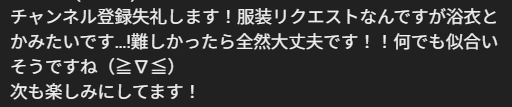
Thank you for subscribing and sending requests!
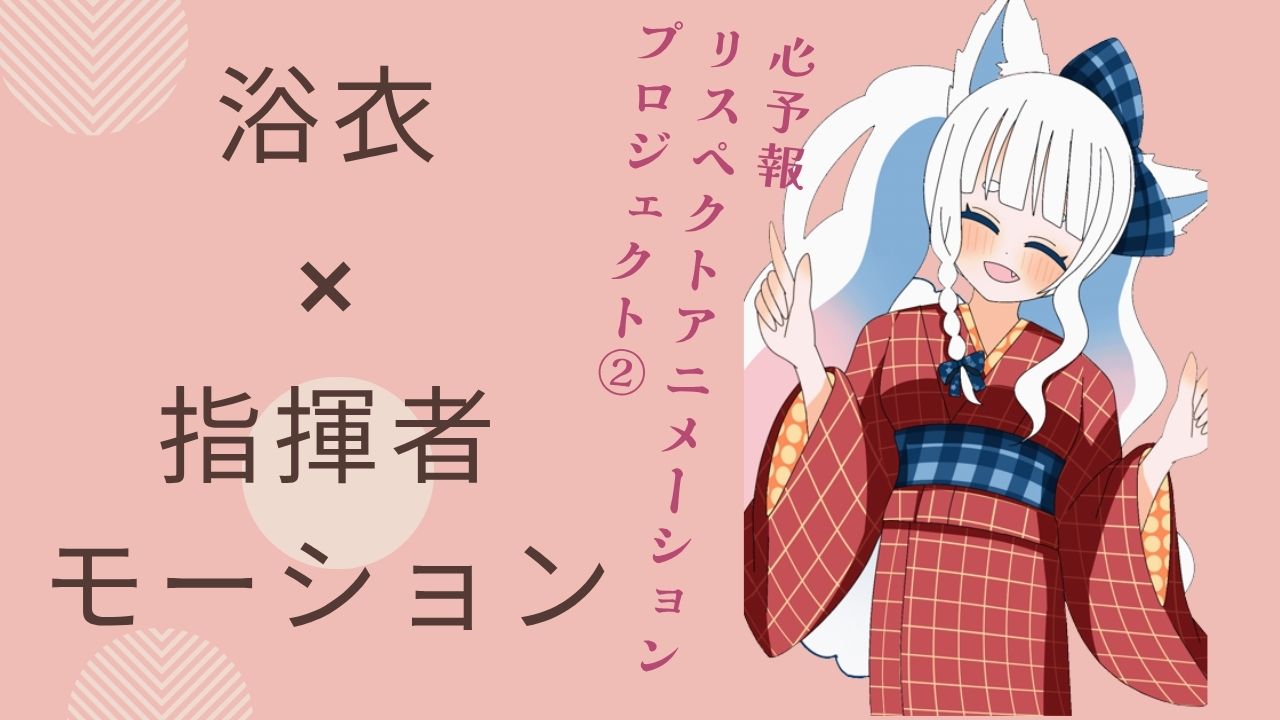
So, this time, I immediately tried out a conductor motion while wearing a yukata.
The swaying of the sleeves, the weight of the fabric, the placement of the pattern—there were challenges that were different from everyday clothing, and I made new discoveries many times while drawing.
This article discusses suchYukata x Conductor MotionThis post will summarize the behind-the-scenes aspects of the production, along with observations made frame by frame and details that needed adjustment.
This time, I'd like to talk about the behind-the-scenes process of creating the animation for this conductor's motion.
 [Heart Forecast ②] Recreating the conductor's motion from Heart Forecast in a yukata! Frame-by-frame improvement points for achieving natural movement and behind-the-scenes production.
The main reason I wanted to depict the conductor's motion in a yukata was, "Changing the outfit changes the character's charm and the interpretation of their movements, which is fun." Is.
I tend to get bored easily, so rather than drawing the same outfit over and over, I find it more enjoyable and easier to continue creating if I change the clothes for each scene, as it allows me to make new discoveries.
Furthermore, when your clothes change, the "restrictions on movement" also change, It will also help improve my own skills.This is one of the advantages.
With a yukata, you notice many details that you wouldn't normally notice in everyday clothing, such as the weight of the sleeves, the placement of the pattern, and the way the fabric sways.
The heartbeat motion will continue, A style where the costume changes with each scene transition.I plan to produce it this way.
This method seems to suit me best because it's enjoyable for the viewers and I can continue doing it without getting bored.

When I started working on the conductor motion, the first thing I did wasObservation of movement。
Up until now, I've mainly focused on depicting vertical jumps and up-and-down movements,The "conductor's movement" involves swinging the arms widely from side to side.“It was an entirely new genre.
At first, I was a little confused, wondering, "What should I use as a reference point...?" But as usual, by carefully checking each frame one by one, I gradually began to see the "habits of movement" and the "way of timing."
especially,
These kinds of subtle details are things you would definitely miss during normal playback.
Frame-by-frame playback is still the bestResearch on movementI was reminded once again that it is indispensable.
[Heart Forecast ②] Recreating the conductor's motion from Heart Forecast in a yukata! Frame-by-frame improvement points for achieving natural movement and behind-the-scenes production.
I was meticulously checking frame by frame to draw the conductor's motion in a yukata,"Hmm, it seems to be moving more violently than I expected...?"This feeling of unease suddenly came to me.
Even movements that are fine in regular clothes can be problematic in a yukata because the fabric is heavy and the sleeves are long, making even slight foot movements or body swaying difficult. “"It can appear larger than it actually is."” That's right.
Therefore, this time,The movement of the feet has been kept to a minimum, and the focus has been shifted to showcasing the expression of the upper body.I did.
While restricting movement increases limitations, I feel that by carefully depicting the sway of the sleeves and the trajectory of the arms, I've been able to bring out the unique suppleness of a yukata.
Frame-by-frame analysis is incredibly useful because it allows you to notice these kinds of differences in how things look depending on the clothing. I got some great hints from it this time as well.
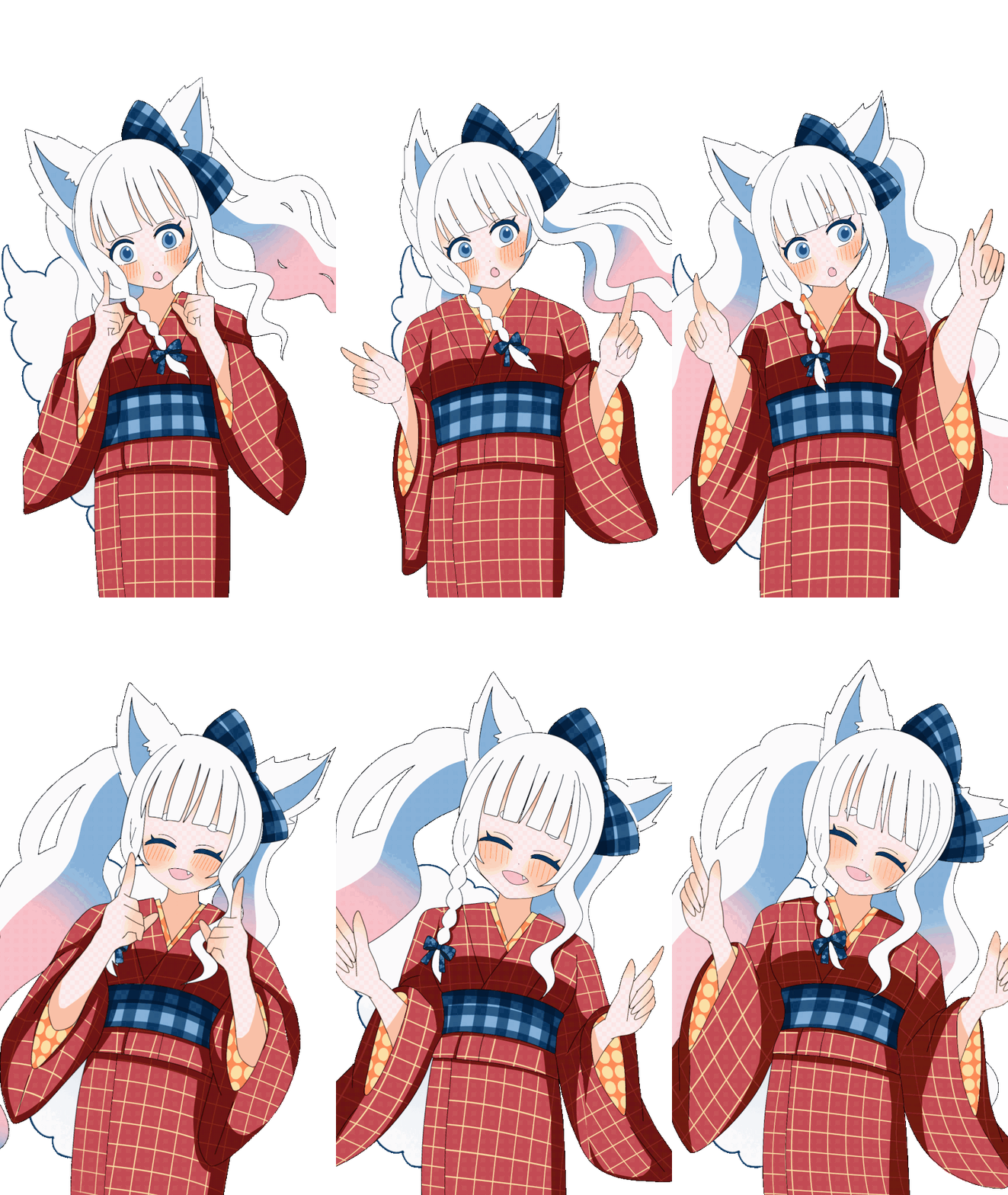
After carefully observing the movement frame by frame, in the actual drawing...Fine-tuning to maintain the naturalness of the characters.I did each step carefully.
The conductor's movements involve large arm trajectories, and the yukata fabric has a complex sway, so I had to be more conscious than usual of making movements that wouldn't fall apart.
The hair movement is more than the previous clapping motion.A little exaggeratedI am doing it.
By making the hair appear to "leave behind" the body's movements, we adjusted the styling to create a natural, three-dimensional effect even with lateral movements.
Since we'll be wearing yukata this time, let's change our hairstyles.Twin tailsChanged.
It's purely a hobby, but it was fun because it broadened my range of movement.
The sleeves, like the hair,The shaking is slightly delayed compared to the movement of the main unit.I drew it that way.
The sleeves of the yukata are long,
We are paying particular attention to these areas when making adjustments.
When the movement of the sleeves is perfectly executed, it greatly improves the overall impression of the conductor's motion, so this might be the part I spent the most time on this time.
The pattern on the yukata is,Make sure the position doesn't shift in each frame.I tried to place them in the same location as much as possible.
As the fabric moves, the pattern naturally distorts, so by paying attention to the "way it distorts" when drawing, you can create a more realistic yukata look.
While yukata with many patterns look great, it's difficult to maintain consistency from frame to frame, so I patiently made adjustments here as well.
In a motion where you swing your arms widely, If the elbow position is off, it instantly looks completely wrong.Therefore, I drew it while comparing the length of the arms and the size of the hands in each frame.
Hands, in particular, tend to get too big if you draw them impulsively, so I always check to make sure they don't look out of place when compared to the previous panel.
The tail, like the hair and sleeves, Moves slightly behind the body's movement.I drew it that way.
To match the soft and gentle feel of the yukata, the tail has also been adjusted to have a subtle and graceful movement.
What I strongly felt after drawing the conductor's motion this time was, "It's important not only to imitate the original, but also to adjust the movements to match the character's personality and clothing." That was the situation.
Because yukata are made of heavy fabric and have long sleeves, they inevitably look awkward when you try to move in them the same way you would in regular clothes.
Therefore, this time, The focus is shifting towards minimizing footwork and emphasizing upper body expression. I did.
It feels like restricting movement narrows the range of expression, but We need to find ways to bring out its appeal in other areas.This is what it will be.
In particular, since this motion involved large arm movements, I made the sleeves of the yukata sway gracefully. The timing of the sleeves, the weight of the fabric, and the delay in the movement. I made some fine adjustments.
As a result, "Movements that can only be created by wearing a yukata"I feel like I was able to express it naturally.
Motion creation is not just about imitating movement, It's the process of "designing the movements" to match the clothing, character, and worldview.This episode made me realize that once again.
The conductor's motion this time is,Wearing a yukata as a new outfit gave me the opportunity to think about movement from a different perspective than usual.
I enjoyed drawing the unique movements of a yukata that arise precisely because of the constraints, such as keeping the feet understated and carefully depicting the swaying of the sleeves.
Motion creation is not just about imitating movement,The process of designing movements to match the character, clothing, and world setting.This episode really made me realize something.
I plan to try out the next motion in a different outfit.
Thank you so much to everyone who left a request in the comments.
I would be happy to continue developing my work together with all of you who watch it.
This time too, my usual partner iPad Air × Procreate × Apple Pencil It was created using a combination of these elements.
The Apple Pencil makes it easy to draw even in small areas, and I feel it's a really good match for my drawing style.

If you found this article helpful and would like to support it,
Receiving encouragement from OFUSE is very motivating.
Your support will be instrumental in creating illustrations and updating my blog.
Thank you very much for reading to the end.
Thanks to everyone who always reads my work, I can continue to create.
I look forward to your continued support.
This article summarizes the tips for "frame-by-frame observation," a technique that proved invaluable in creating conductor motions.
If you're looking to correct any awkwardness in your hand movements or subtle actions, this article might be helpful.
[Heart Forecast ②] Recreating the conductor's motion from Heart Forecast in a yukata! Frame-by-frame improvement points for achieving natural movement and behind-the-scenes production.This article summarizes the points for improvement in the applause motion, which I drew before starting on the conductor motion.
I've written in detail about what was corrected frame by frame and how the unnatural movements were resolved.
If you're interested in learning about motion creation, this might also be helpful.
[Heart Forecast ②] Recreating the conductor's motion from Heart Forecast in a yukata! Frame-by-frame improvement points for achieving natural movement and behind-the-scenes production.Additionally, I've posted a video of the conductor's motion on YouTube.
The subtle nuances of the sleeve movement and timing, which couldn't be fully conveyed in the article, are much easier to understand by watching the video.
If you'd like, I'd be happy if you could enjoy it along with the behind-the-scenes look at the production. → YouTube is here
(Your channel subscriptions and requests are truly encouraging!)