What are the benefits of a one-hour drawing challenge? The golden ratio of "two-hour drawing + one hour review" and the ultimate typing practice method for beginner illustrators to improve rapidly.
Pochi
Reading in the sun and reading in the rain.
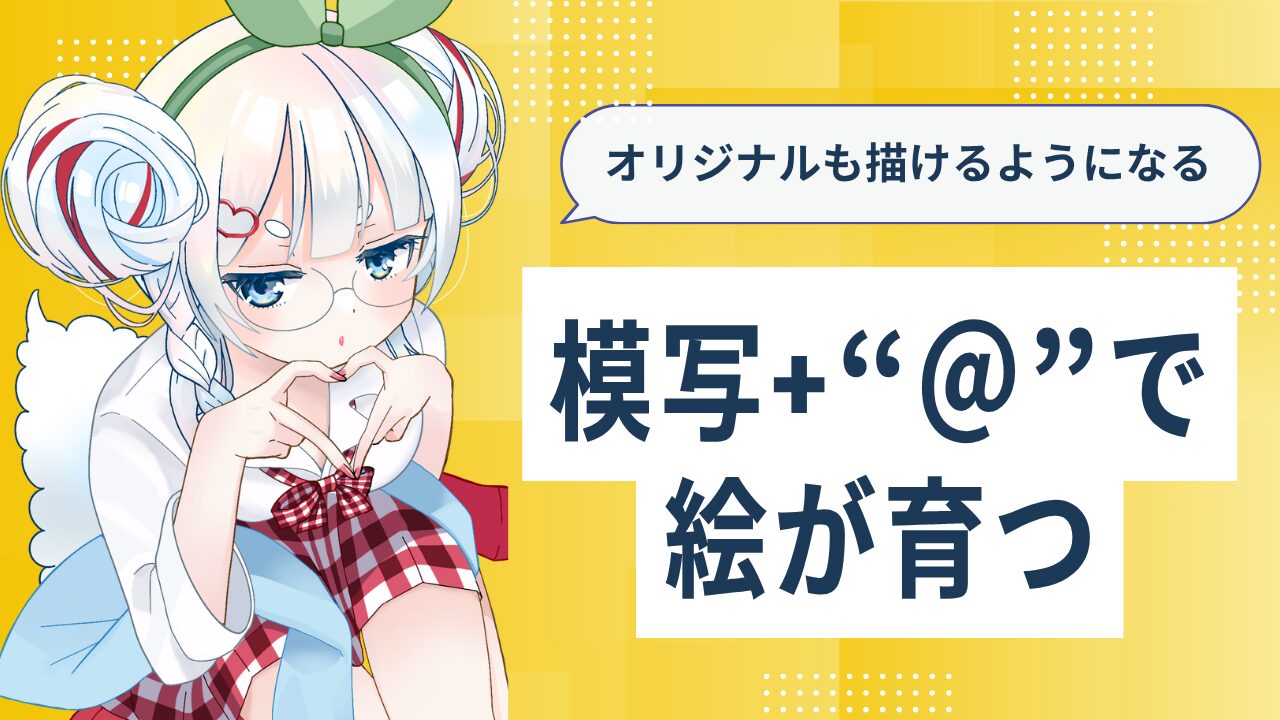
"I'm trying to copy, but I can't draw anything original..." "My drawing style isn't consistent..."
Many people inevitably face such problems.“"The wall of copying"”That's it. No matter how carefully I copy others, when it comes to actually drawing my own characters, my hands freeze.
But please don't worry.
Simply adding "just a little bit of originality" to your copying can dramatically change the speed at which you improve.
Since I encountered the practice method of "applying it to my own character," The desire to draw naturally welled up within me, and the range of my expression expanded more and more.
This article will discuss the new practice method. “"Copying + more"” The appeal and Specific steps that even beginners can start today I will introduce them to you.
I hope this will be the catalyst for your character to come alive and move more vividly.
If you only draw by copying,"I can't draw anything original...""My drawing style isn't consistent..."Many people encounter this kind of problem.
Copying is an excellent exercise for developing observational skills, but simply continuing to do so will not be effective. “The transition from "copying" to "original" remains weak.It will end up like this.
As a result, the moment I try to draw my own character, I sometimes find myself frozen, thinking, "Hmm, how should I draw this...?"
Therefore, what I would like to recommend is, This practice method, called "copying + something extra," involves incorporating a little bit of your own character (original character) into your copy.
This method effectively utilizes the advantages of copying while simultaneously providing practice in original expression. The speed at which your drawing skills improve will suddenly accelerate. I truly feel that way.

"Copying + something else" means A practice method of drawing by copying and substituting your own character (original character).That's what I mean.
Simply copying repeatedly will improve your ability to "reproduce" good drawings, but It's difficult to develop the ability to connect one's own art style and original expression.This is its weakness.
A useful technique is to gradually incorporate elements of your own character during the copying stage.
For example, you've probably seen VTubers using their own characters to pay homage to dances and poses that are popular on YouTube or X.
It's exactly like that, using the pose and composition of the copy as a base, I will draw the character by converting their clothing, body type, and overall appearance to match my own character's specifications.This drastically reduces the gap between the copy and the original.
Since adopting this method, I've found that I naturally feel the urge to draw things like, "Next, I want to have my character dance this dance!" or "They would look absolutely adorable in these clothes!"
By utilizing the observational skills gained from copying, you can simultaneously hone your ability to interpret and express your own characters. The shortest route to being able to draw originalsThat's what I feel.
"Copying + something extra" is a practice method where you copy an existing image while substituting it with your own character (your original character).
Simply by repeatedly copying, your ability to reproduce good drawings will certainly improve. However, if you take it a step further...The power to connect to one's own art style and original expression.To cultivate it, we'll need to put in a little more effort.
Therefore, at the stage of copying,A method of subtly incorporating elements of your own character.
For example, you've probably seen VTubers using their own characters to pay homage to dances and poses that are popular on YouTube or X.
Just like that, I use the poses and compositions of copied works as a base, but I adapt the clothing, body type, and overall atmosphere to suit my own character.。
That alone will significantly reduce the gap between copying and originality, and you'll naturally develop a sense of "drawing your own characters."
Since I started using this method,"Next, I want to have my own character perform this dance!" "She'll look absolutely adorable in these clothes!" And so, the desire to draw began to well up inside me more and more.
The great appeal of "copying + something extra" lies in the fact that you can utilize the observational skills honed through copying while simultaneously developing your own interpretation and expression of your own characters.
The most important thing when choosing a subject to copy is,Choose something that moves your heart, something you want to draw or something that makes you want to have your character strike a pose.Is.
Because that "excitement" is what motivates you to continue practicing. Your concentration and ability to absorb information will be overwhelmingly higher when you're working on a subject you want to draw than on something you're not interested in.
Furthermore, if you aim to improveIt's also important to choose poses you haven't drawn before, or compositions that are a little challenging.
By tackling challenging subjects, you can learn points you wouldn't normally notice in your everyday drawings, such as: • Body twisting • How to find your center of gravity • The silhouette of clothing
A subject that combines "the desire to draw" and "a little bit of difficulty" is the best choice for copying, as it will lead to improvement.
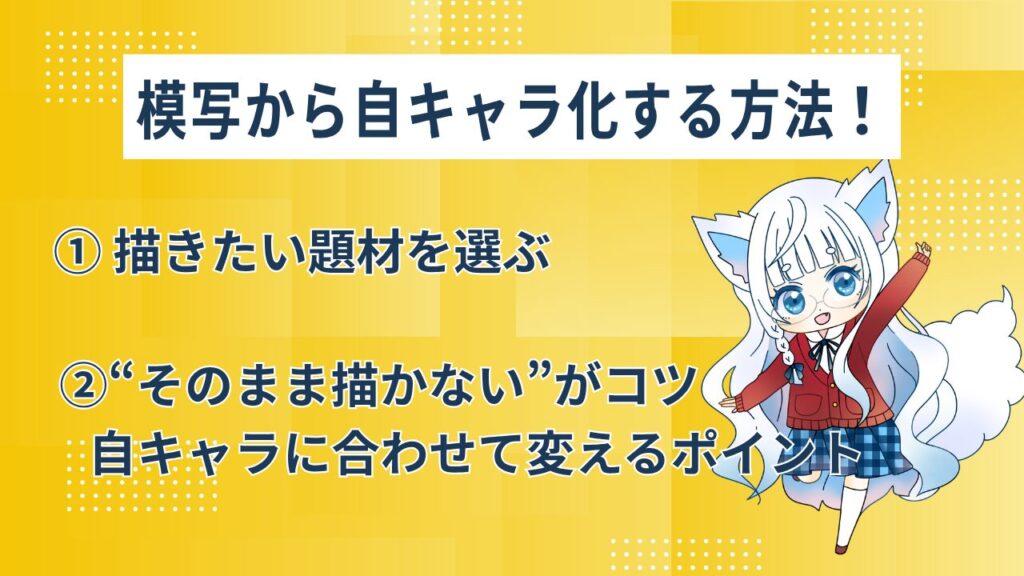
Here, I do what I usually doThe specific steps from "copying" to "creating your own character"I will introduce them to you.
The most important thing when choosing a subject to copy is, Choose something that moves your heart, something you want to draw or something that makes you want to have your character strike a pose.
Because that "excitement" is what motivates you to continue practicing. Your concentration and ability to absorb information will be overwhelmingly higher when you're working on a subject you want to draw than on a subject you're not interested in.
Furthermore, if you aim to improvePoses I've never drawn before, and compositions that are a little difficult.Choosing the right option is also very important.
When you take on a difficult subject,
You can naturally learn points that are often overlooked in everyday drawing.
"The desire to draw" and "a little bit of difficulty." Choosing a subject that possesses both of these qualities is the best way to select a piece for copying that will lead to improvement.
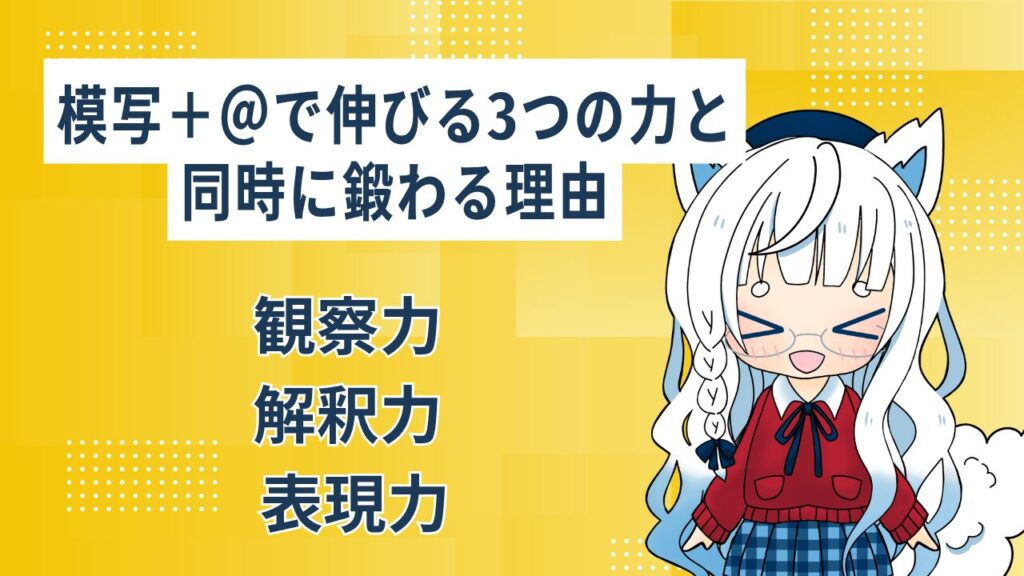
If you continue copying and adding extras, firstObservational skillsIt grows significantly.
In the paintings of skilled artists,
There are many hints hidden within that can be used in future works.
By copying and internalizing it, "The ability to see" = The fundamentals of drawing become strongerYes.
In the process of adapting a copy to your own character, "My character probably wouldn't do something like this." "This child is more likely to do something like this." This naturally deepens our understanding of the characters.
This power can be applied to other characters as well. "This girl looks like she'd wear a skirt." "This character should be able to move more lightly." This helps develop the ability to "read and understand the unique characteristics of each character."
Even if the character you're copying is wearing a skirt, if your character is a boy...You need to convert them into trousers.
If your clothes change,
such as those not present in the original copy. “The ability to draw the "@" part yourselfThis will strengthen your muscles.
This isExpressive powerIt is an essential skill for creating original artwork.

Applying these techniques to your own character doesn't require any difficult skills to get started. Here, we'll introduce simple and easy-to-follow practice examples that even beginners can start today.
Choose one dance, pose, or composition that's trending on YouTube or X. Since it's something popular, you'll naturally feel like you want to draw it, making it easier to stick with your practice.
You don't have to create your own character right away. To begin with, simply copy the original drawing to understand the flow of the body, the center of gravity, and the silhouette of the clothes.
For beginners, the trick is not to try to change everything, but to change just one or two things. Example:
Facial expressions → Just try to match them to your own character's unique style. This alone will make it "copying + something extra."
Skirt → If your character is male, change it to pants.
Long hair → Change to your character's hairstyle
Once you get used to it, you can adjust things like body type, clothing, and movements to suit the character's personality.
When you reach this point, you'll have an original expression that combines the strengths of the source material with the individuality of your own character.
To help you grasp the concept of "copying + something extra," I'll also introduce some homage works that I've actually drawn.
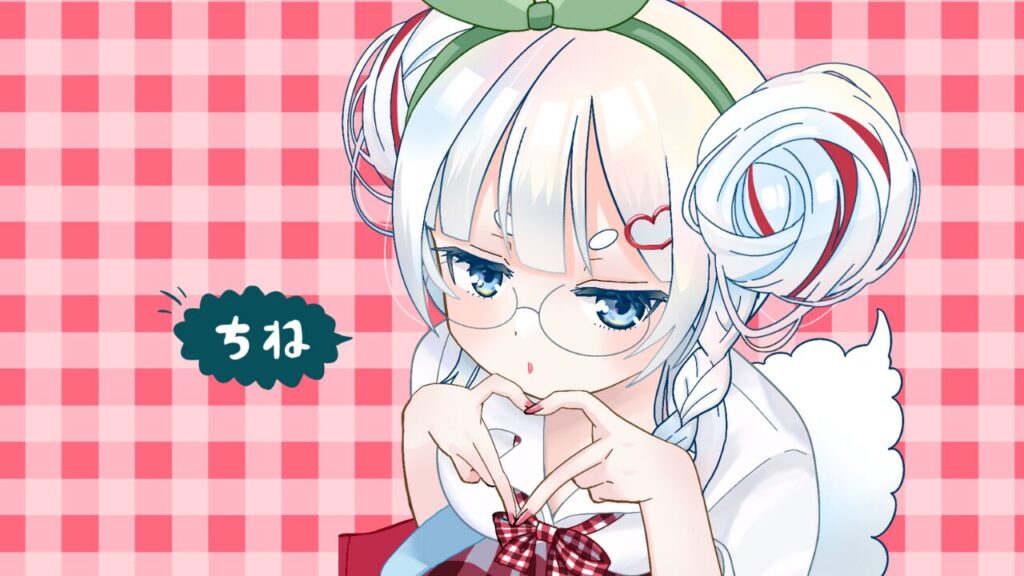
This homage piece is introduced here, so please refer to this article as well.
 “What is "Copying + More"? A new practice method for improving your drawing skills, even for beginners.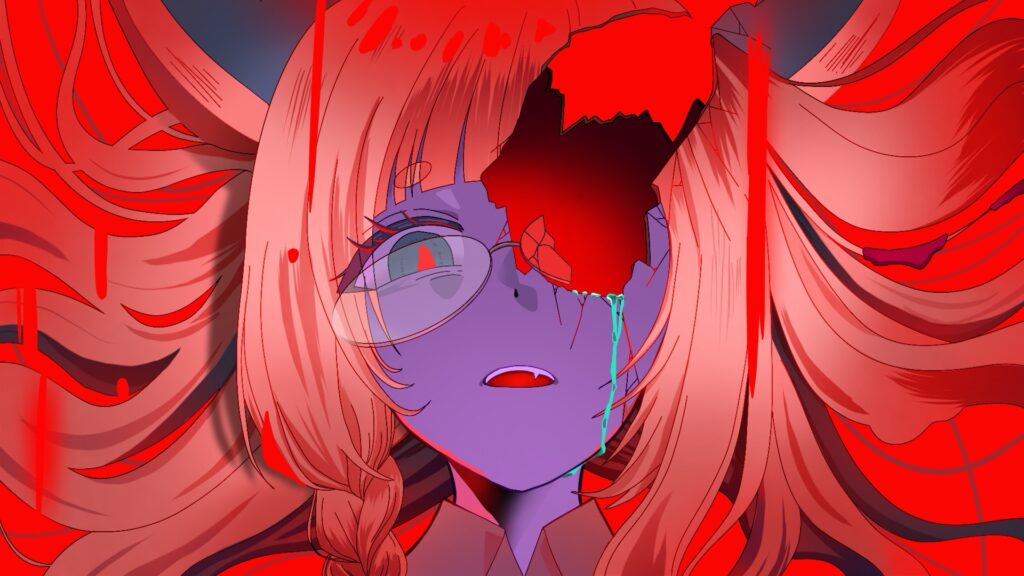
This homage piece is introduced here, so please refer to this article as well.
“What is "Copying + More"? A new practice method for improving your drawing skills, even for beginners.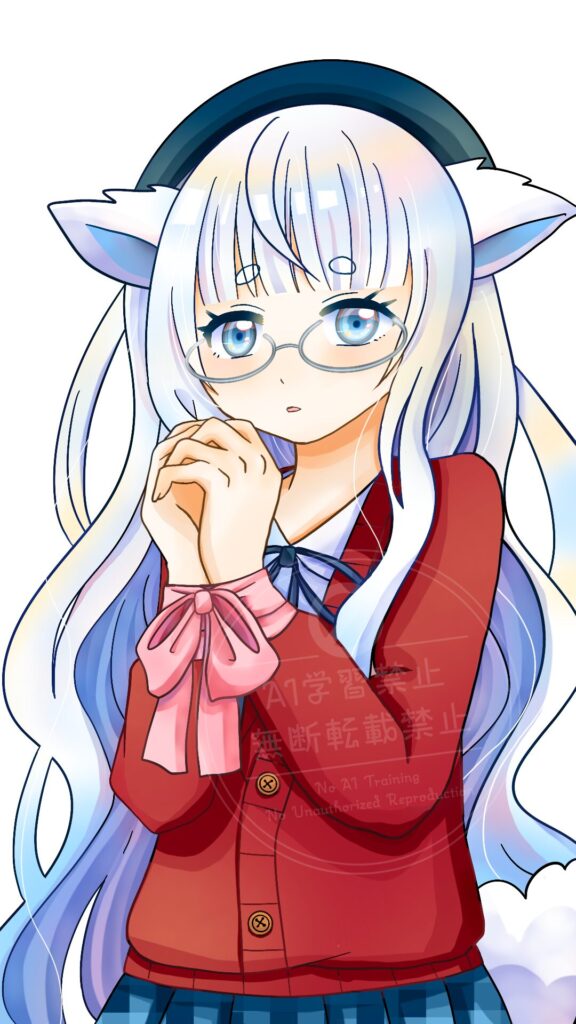
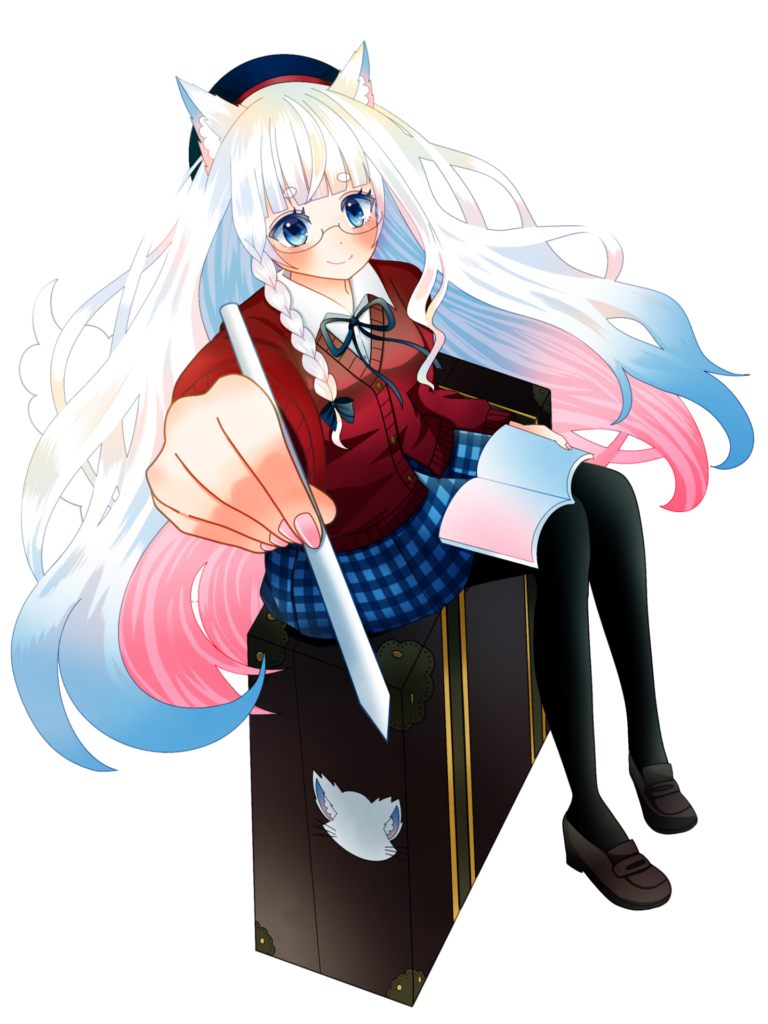
Before I started copying other people's work, I would just "sort of" try to imitate the drawings of skilled artists.
The lines are thick, and it's unclear whether there are shadows or not.
I hadn't properly observed the details in the picture.
Since I started incorporating the techniques of copying existing artwork into my own characters, the way I see art has completely changed.
I was able to directly apply the "insights" I gained from copying the original to my own characters.
The lessons I learned from Shigure Ui's style of expression naturally blended into my own drawing style.
"If this pose were my own character, it might move like this." "This outfit will definitely suit you." With those feelings welling up inside me, drawing became more and more enjoyable.
As a result, the consistency of the art style and the range of expression have greatly expanded. “I developed a clear sense of "being able to draw."

Copying plus something extra is a very efficient practice method that allows you to cultivate your own style, the appeal of your own characters, and original expression at the same time, while making the most of the advantages of copying.。
I believe that originality doesn't suddenly appear; rather, it's like a reward that naturally develops through a series of homages and acts of respect.
Of course, it is absolutely essential to follow the terms and conditions of the work being copied.
Only by following the rules can a copy be considered a respectful homage, not plagiarism. I myself always make sure to check the rules before I start drawing.
Copying and adding something extra is a method anyone can start today.
I hope this will inspire your character to come alive and move more vividly.
This time too, my usual partner iPad Air × Procreate × Apple Pencil It was created using a combination of these elements.
I find the Apple Pencil to be very easy to use for drawing even in small areas, and I feel it's a really good match for my drawing style.

If you found this article helpful and would like to support it,OFUSE Your support would be a great encouragement to me.
Your support will be instrumental in creating illustrations and updating my blog.
To cheerThank you very much for reading to the end.
Thanks to everyone who always reads my work, I can continue to create.
I look forward to your continued support.
This article is inspired by Van Gogh's "The Little Window." It summarizes how to use your field of vision and create an environment conducive to concentration, making it useful for improving your creative performance.
“What is "Copying + More"? A new practice method for improving your drawing skills, even for beginners.This guide introduces how to use Stickybones, a useful tool for creating character movements and compositions.
“What is "Copying + More"? A new practice method for improving your drawing skills, even for beginners.This article introduces a method for choosing tasks based on your energy level each day. Knowing which days you want to draw, which are lighter, and which are rest days will make it easier to continue with copying existing artwork plus additional tasks.
“What is "Copying + More"? A new practice method for improving your drawing skills, even for beginners.This document compiles information useful for studying soft lines and textures.
“What is "Copying + More"? A new practice method for improving your drawing skills, even for beginners.This section introduces key points for recreating a style and the process involved when actually receiving a request.
“What is "Copying + More"? A new practice method for improving your drawing skills, even for beginners.